
Nearly 195 million American adults drink coffee each week, and 66% had coffee in the past day, according to the National Coffee Association’s spring 2026 data. For most offices, that means coffee is the most-used thing in the breakroom.
Office coffee service puts a provider in charge of it. Here’s how office coffee service works, how the main brewer types compare, and what to look for in a provider, especially if you’re managing more than one office.
What office coffee service includes
With office coffee service, a provider supplies the brewing equipment, installs it, keeps it stocked and maintains it. You stop buying coffee in bulk, troubleshooting a broken machine and wondering who forgot to reorder filters.
A typical program covers:
- Equipment: one or more brewers matched to your headcount and taste
- Coffee and tea: a mix of familiar brands, premium roasts, flavored teas, cold brew and seasonal options
- Supplies: the cups, creamers, sweeteners and stirrers that go with them
- Restocking: scheduled deliveries so nothing runs out
- Maintenance: cleaning, descaling and repairs, so the machine keeps brewing and the coffee keeps tasting right
Batch brewers, single-cup or bean-to-cup?
The brewer is the biggest decision in any coffee program. Each type suits a different kind of office.
Batch brewers
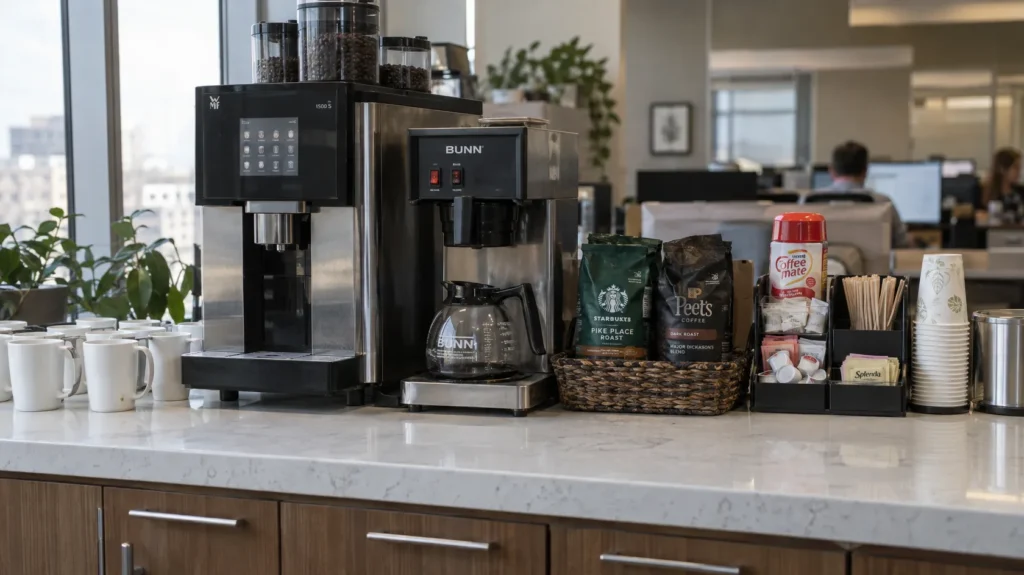
Batch brewers make a full pot or airpot at once. They’re the right call when a lot of people want coffee at the same time: morning meetings, shift starts, training rooms. The downside is freshness. Coffee that sits on a warmer for an hour tastes like it.
Single-cup brewers
Single-cup brewers, like Keurig machines, brew one cup at a time from a pod. Each person picks their own roast, tea or flavor, and nothing goes stale in a pot. They fit small teams and offices with lots of different preferences. The tradeoff is pace during a morning rush, plus the steady flow of used pods.
Bean-to-cup machines
Bean-to-cup machines grind whole beans for each cup and can make lattes, cappuccinos and other espresso drinks at the push of a button. That matters more than it used to. The NCA found that past-week espresso-based drink consumption rose from 40% in 2022 to 45% in its spring 2026 survey. Bean-to-cup is the closest thing to a café in the office, and it’s the format many teams now expect.
Plenty of offices mix formats: a bean-to-cup machine in the main breakroom and a batch brewer for the conference floor.
Don’t forget decaf and tea
A good program serves the people who don’t want a third cup. The FDA cites 400 milligrams of caffeine a day, about two to three 12-ounce cups of coffee, as an amount generally not linked to negative effects in healthy adults. Some employees stay well under that. Decaf, herbal tea and non-coffee options make the breakroom work for them too.
What to look for in a provider
Coffee equipment is only as good as the service behind it. Before you sign, ask:
- What equipment do you recommend for our headcount, and why? A good provider asks about your team before quoting a machine.
- How often do you restock, and how are levels tracked? Running out on a Monday morning is the complaint you’ll hear most.
- Who cleans and descales the machines, and how often? Scale buildup and old coffee residue change how the coffee tastes.
- How fast do you respond to repairs? Ask for a specific response window.
- Can we change the product mix? Seasonal roasts and employee requests keep the program from going stale.
- What happens at the end of the agreement? Know who owns the equipment and how removal works.
Keeping coffee consistent across multiple offices
Coffee gets complicated once you have offices in several cities. Each site often ends up with its own vendor, its own machines and its own standard. Headquarters has a bean-to-cup machine, the regional office has a pot that’s been on the warmer since 7 a.m., and nobody in procurement can say what the company spends on coffee overall.
A national program fixes that by setting one standard for equipment, product range and service, then delivering it locally. Guardian Refresh partners with local, regional and nationwide coffee service providers, vetted against strict criteria, and manages every location through one point of contact. Your offices get local support from a provider in their area. You get one relationship and the same level of service everywhere you do business.
For the culture side of the decision, our post on how great coffee fuels culture, focus and retention covers why it’s worth getting right.
Getting started
Tell us how many offices you have, roughly how many people are at each, and what your teams drink now. A Guardian Refresh representative will design a program at no cost, and a local provider at each site will handle setup and regular delivery. See our office coffee service options or contact us to start planning.