

We’ve all been there. It’s 2:30 in the afternoon, you’ve been staring at the same spreadsheet for two hours, and your brain has officially checked out. The instinct is to push through, maybe grab another coffee, and power toward the end of the day.
But research suggests that’s exactly the wrong approach.
The Science Is Pretty Clear
Micro-breaks are short pauses lasting anywhere from 30 seconds to 10 minutes, taken throughout the workday. And despite what hustle culture might tell you, they don’t hurt productivity. They improve it.
A meta-analysis published in PLOS One reviewed decades of research on micro-breaks and found that short breaks help employees feel more vigorous, less fatigued, and more productive after returning to work. Importantly, no study in the analysis found that taking breaks decreased performance, even when accounting for time spent away from the task.
Research from Cornell University found that frequent micro-breaks can increase performance by nearly 13%, and that number climbs above 15% when the breaks involve stretching or movement.
Perhaps the most striking data comes from Slack’s Workforce Index, a global survey of over 10,000 desk workers. They found that employees who take regular breaks report 13% higher productivity scores than those who don’t. Break-takers also showed 62% higher work-life balance scores, 43% greater ability to manage stress, and 43% higher overall job satisfaction.
On the flip side, workers who rarely or never take breaks are 1.7 times more likely to experience burnout.
The Problem: Most People Don’t Take Them
Despite the evidence, half of all desk workers say they rarely or never take breaks during the workday, according to the same Slack study. Common barriers include feeling too busy, worrying about how it looks, or simply forgetting when deep in focus mode.

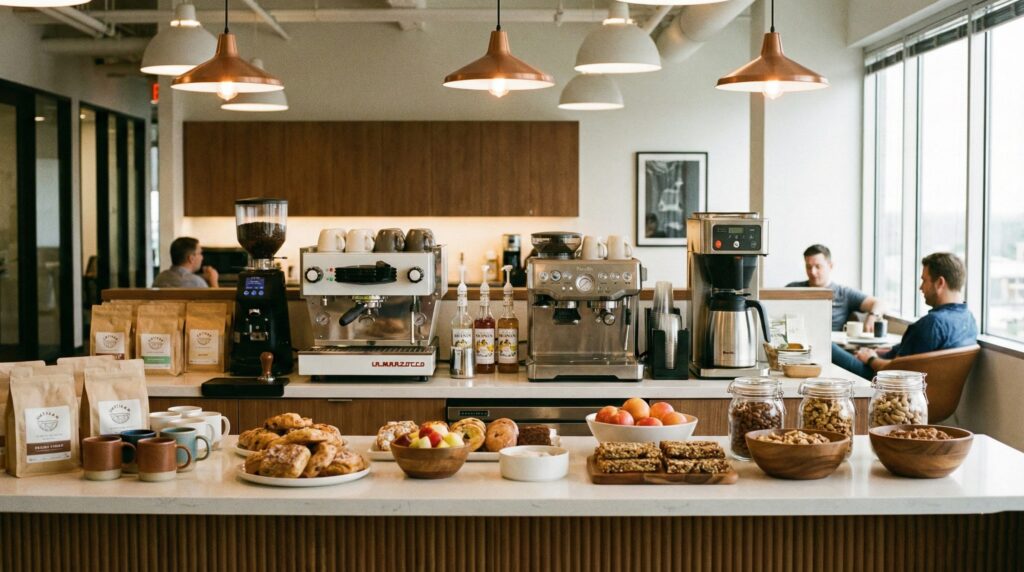
This is where environment plays a role. If taking a break means walking to a distant water fountain or finding nothing appealing in the breakroom, people are less likely to do it. But when there’s a reason to step away, whether that’s a good cup of coffee, a quick snack, or just a comfortable space to decompress, employees are more inclined to actually take the pause they need.
What to Stock for Micro-Breaks
The goal is to make breaks easy, appealing, and quick. Here’s what works:
Hydration options beyond the basics. Flavored sparkling water, coconut water, or electrolyte drinks give people a reason to get up and grab something. Staying hydrated also supports focus and energy throughout the day.
Protein-forward snacks. Nuts, cheese, yogurt, protein bars, and jerky provide sustained energy without the sugar crash. These are ideal for a quick refuel that won’t leave someone sluggish 30 minutes later.
Fresh fruit and vegetables. Simple, portable options like apples, bananas, baby carrots, or clementines are easy to grab and eat in a few minutes. Consider a micro market to make fresh food stocking easy and economical.
Quality coffee and tea. For many employees, a coffee break is already a ritual. Making sure the options are good, not just available, turns a caffeine run into a genuine reset.
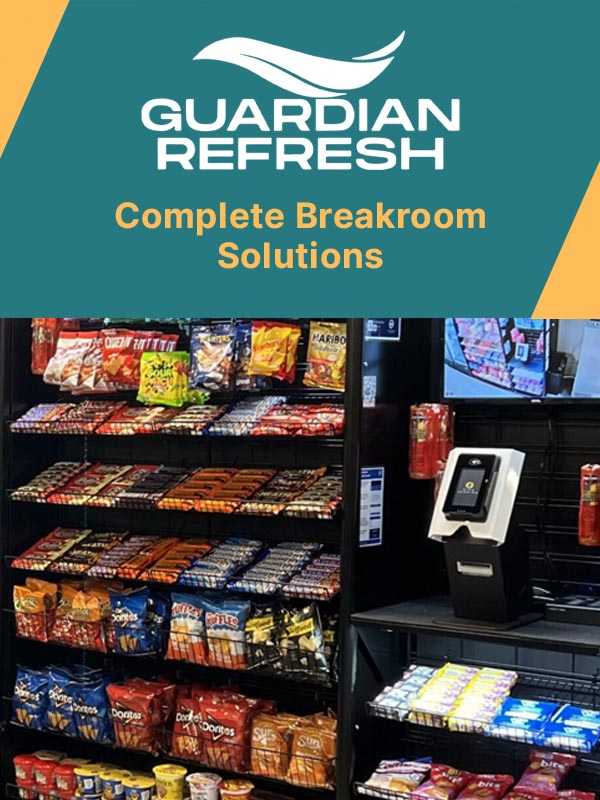
A few indulgences. Not every snack needs to be virtuous. A small selection of cookies, chocolate, or chips gives people something to look forward to without overdoing it. Vending machines can be a great addition to your breakroom to stock these options.
Small Investment, Real Returns
Micro-breaks don’t require a wellness program or a policy change. They just require a breakroom worth visiting. When employees have easy access to good snacks, quality beverages, and a space that invites a quick mental reset, they’re more likely to take the breaks that keep them sharp, engaged, and less prone to burnout.
The research backs it up. The rest is just stocking the shelves.