

Most people know they should drink more water. And yet, most people don’t.
This can be more of a design problem than a personal failing. When we’re busy, focused, or bouncing between meetings, reaching for a glass of water falls to the bottom of the priority list. By the time we feel thirsty, we’re often already mildly dehydrated.
Now multiply that across your entire workforce, and you’ve got a subtle but persistent drag on energy, focus, and productivity.
The Numbers Are Pretty Telling
Studies suggest that around 75% of Americans are chronically dehydrated. Not severely—just enough to matter. Even mild dehydration (losing just 1-2% of your body’s water) has been linked to reduced concentration, slower reaction times, and increased feelings of fatigue and anxiety.
For desk workers, this often shows up as that mid-afternoon fog—the vague tiredness that sends people hunting for another cup of coffee or a sugary snack. Caffeine and sugar aren’t bad in moderation, but they’re not solving the underlying issue. Sometimes the simplest fix really is a glass of water.
Why the Workplace Makes It Worse
Offices aren’t always set up to encourage hydration. Common barriers include:
Inconvenient access. If the nearest water source is a bathroom sink or a water fountain two floors down, people just won’t go that often.
Forgetfulness. Deep focus is great for productivity—but it also means hours can pass without someone thinking about basic needs like water.
Beverage competition. When coffee, soda, and energy drinks are readily available and water isn’t as appealing or accessible, water loses.
No visual cues. People are more likely to drink water when it’s visible and within arm’s reach. Out of sight, out of mind.
None of these are dramatic obstacles. But small friction adds up across a full workday.
Small Changes That Actually Help
The good news is that improving workplace hydration doesn’t require a wellness initiative or a big budget. A few simple shifts can make a noticeable difference:
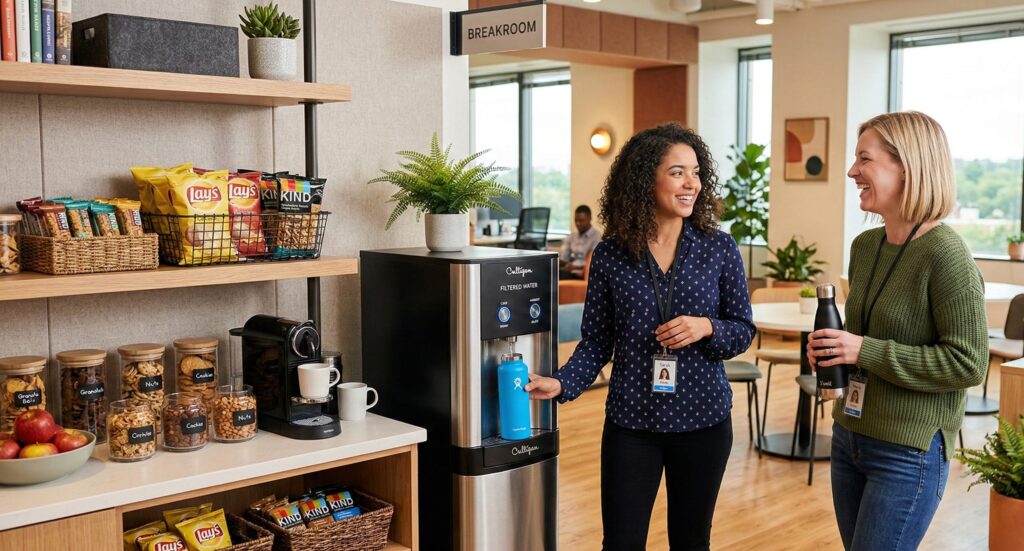
Make water more accessible. Filtered water stations, countertop dispensers, or even a well-stocked beverage cooler can remove the friction. The fewer steps between someone and a cold glass of water, the better.
Offer variety. Flavored sparkling water, electrolyte drinks, and infused options appeal to people who find plain water boring. Meeting people where they are beats lecturing them about hydration.
Keep it visible. Breakrooms and common areas should make water the easy default—not an afterthought next to the soda.
Lead by example. When managers and team leads carry water bottles and take hydration seriously, it normalizes the behavior.
It’s a Small Thing, But It Adds Up
No one’s claiming that better hydration will transform your business overnight. But the small, cumulative effects are real. Fewer headaches. Steadier energy. Better focus in afternoon meetings. Less reliance on sugar and caffeine to power through the day.
And from an employee experience perspective, it signals something: that the company pays attention to the basics. That the breakroom isn’t just an afterthought.
Sometimes the most meaningful workplace upgrades are the simplest ones. Water might not be flashy, but it works.