
The office breakroom has evolved from a simple space with a coffee pot and vending machine into a strategic asset that directly impacts employee satisfaction, productivity, and retention. As we move through 2026, the expectations around workplace food services continue to rise, and the companies investing in modern breakroom experiences are seeing measurable returns.
Whether you’re an office manager looking to refresh your current setup, a facility director planning a renovation, or a C-suite executive evaluating your total benefits package, understanding the latest trends in breakroom services will help you make informed decisions that resonate with your workforce.
The Clean Label Movement Takes Center Stage
One of the most significant shifts we’re seeing in 2026 is the heightened focus on clean label products—snacks and beverages free from synthetic dyes, artificial additives, and hard-to-pronounce ingredients. This isn’t just a passing fad. States like California and New York are leading regulatory efforts to ban certain synthetic dyes (Red 40, Yellow 5 & 6, Blue 1 & 2), with California’s school-based restrictions set to take effect in 2027.
While these regulations don’t immediately affect office environments, the message is clear: your employees are paying closer attention to what they consume. Stocking your breakroom with clean label options—organic snacks, naturally sweetened beverages, and whole food choices—demonstrates that your organization values employee wellness and stays ahead of evolving food standards.
What this means for your breakroom: Partner with a service provider who understands ingredient transparency and can help you curate selections that meet modern health expectations without sacrificing taste or convenience.
Smart Technology Transforms the Vending Experience
The vending machines of 2026 bear little resemblance to their predecessors. Today’s smart vending solutions offer touchless payment options, mobile app ordering, real-time inventory tracking, and AI-powered analytics that optimize product selection based on actual consumption patterns.
These technological advances benefit everyone. Employees enjoy seamless, contactless transactions through credit cards, Apple Pay, Google Wallet, or smartphone apps—no more searching for exact change. Meanwhile, facility managers gain unprecedented visibility into usage patterns, allowing for smarter restocking schedules and product assortment decisions.
Some of the most innovative systems even allow employees to scan a QR code, select items from their phone, and simply grab their purchases—eliminating the frustration of failed vending transactions entirely. Remote monitoring capabilities mean your service provider can address issues before employees even notice them, ensuring your breakroom runs smoothly around the clock.
What this means for your breakroom: When evaluating vendors, ask about their technology stack. Smart vending isn’t just a nice-to-have anymore—it’s becoming the baseline expectation for modern workplaces.
Micro Markets: The Evolution Beyond Traditional Vending
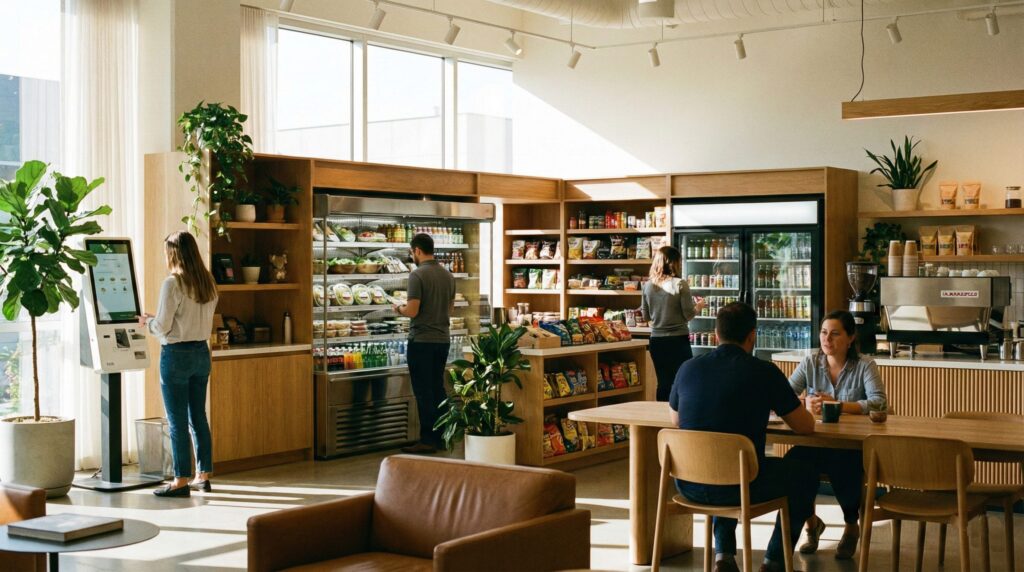
Micro markets continue to gain momentum as companies recognize the value of offering fresh, restaurant-quality options in an unattended retail environment. Think of it as a miniature convenience store right in your office—open refrigerated cases, fresh sandwiches and salads, hot food options, and a self-checkout kiosk that makes purchasing as easy as scanning and tapping your card.
The appeal is obvious. Micro markets dramatically expand the variety of products you can offer, including fresh fruit, yogurt parfaits, grab-and-go meals, and specialty items that wouldn’t work in a traditional vending format. For organizations encouraging employees back to the office—even on a hybrid schedule—having quality food options on-site removes a major friction point and keeps teams productive throughout the day.
Research shows that 64% of professionals are now seeking desk-friendly meals, making workplace food service more relevant than ever as a competitive advantage in the battle for talent and engagement.
What this means for your breakroom: If your space allows, a micro market installation might be the upgrade that transforms your breakroom from functional to exceptional. The investment pays dividends in employee satisfaction and reduced time spent leaving the office for meals.
Protein, Functional Foods, and Metabolic Health
Employees in 2026 are increasingly focused on how food makes them feel, not just how it tastes. The emphasis on protein-rich snacks, functional beverages with adaptogens or probiotics, and metabolically supportive options reflects a broader cultural shift toward longevity and sustained energy.
You’ll see this trend play out in several ways:
- High-protein snacks like Greek yogurt, jerky, protein bars, and nuts are in high demand
- Fermented foods and prebiotic snacks supporting gut health
- Functional beverages offering benefits beyond hydration—think collagen-infused drinks, sparkling waters with electrolytes, or cold brew enhanced with MCT oil
- Better-for-you indulgences like dark chocolate (70%+ cacao) that satisfy cravings while delivering nutritional benefits
The goal isn’t to eliminate indulgent treats entirely but to ensure your breakroom offers balanced choices that support various dietary goals and lifestyles.
What this means for your breakroom: A diverse product mix matters more than ever. Stock options that serve everyone from the keto enthusiast to the plant-based eater to the person who just needs a quick energy boost between meetings.
Sustainability Isn’t Optional Anymore
Environmental consciousness continues to influence purchasing decisions at every level. Employees—particularly younger generations—expect their employers to make sustainable choices, and the breakroom is a highly visible place to demonstrate those values.
Forward-thinking organizations are prioritizing:
- Sustainably sourced coffee and tea (Fair Trade, Rainforest Alliance, organic)
- Minimal packaging and recyclable/compostable materials
- Filtered water systems that eliminate single-use plastic bottles
- Reusable dishware programs that reduce waste
- Local and regional products that minimize transportation impact
The beauty of sustainability initiatives is that they often align with cost savings. Filtered water systems, for example, deliver better-tasting water at a fraction of the cost of bottled alternatives while dramatically reducing plastic waste.
What this means for your breakroom: Work with a service provider who shares your sustainability values and can help you implement eco-friendly solutions without complicating operations.
Premium Coffee Service: The Non-Negotiable Perk
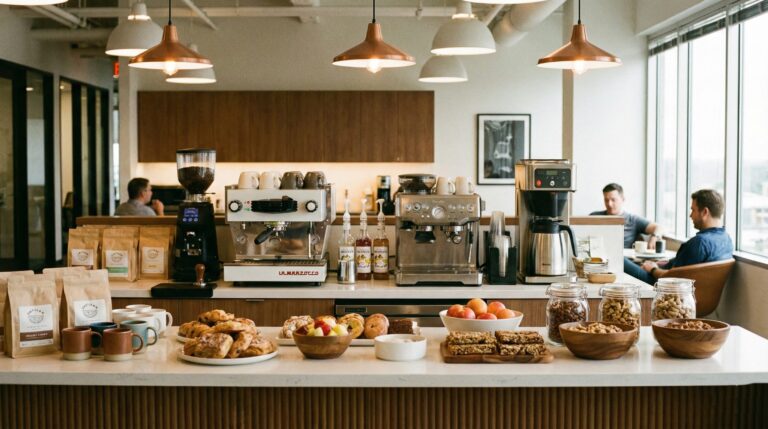
If there’s one thing that hasn’t changed, it’s this: coffee matters. Quality coffee service remains one of the highest-impact, most appreciated workplace perks, and expectations have only grown more sophisticated.
In 2026, employees expect options that rival their favorite coffee shop—single-serve machines with variety, bean-to-cup systems that grind fresh for each cup, cold brew on tap, and a full complement of creamers, alternative milks, and flavor options.
The ROI on premium coffee service is remarkable. When employees have access to excellent coffee on-site, they’re more likely to start their day in the office, stay productive during mid-afternoon slumps, and feel valued by their employer. The cost per cup is still dramatically lower than retail coffee shops, making it a smart investment that pays for itself in improved engagement and reduced lost productivity.
What this means for your breakroom: Don’t cut corners on coffee. Whether you choose a fully automated bean-to-cup system, a high-quality single-serve solution, or a combination approach, make sure your coffee service reflects the quality of your organization.
Personalization and Choice Drive Engagement
The days of one-size-fits-all breakroom solutions are over. Employees expect choices that reflect their individual preferences, dietary restrictions, and wellness goals. This means moving beyond generic snack assortments to curated selections that serve diverse needs.
Smart breakroom providers now use consumption data to optimize product mixes specific to your location. They can identify which items move quickly, which sit on the shelf, and how preferences shift seasonally. This data-driven approach ensures your breakroom investment delivers maximum value.
What this means for your breakroom: Regular communication with your service provider is essential. Share feedback, ask about new products, and don’t be afraid to experiment with offerings. The best partnerships are collaborative.
The Return to Office Factor
With many organizations navigating hybrid work arrangements, the office breakroom has taken on new strategic importance. It’s no longer just about convenience—it’s about creating compelling reasons for employees to come to the office.
Quality food and beverage services send a clear message: you’re investing in the in-office experience. Fresh options, variety, and convenience all contribute to making office days feel like a benefit rather than a burden. Companies that get this right see stronger attendance, better collaboration, and improved morale among teams.
What this means for your breakroom: View your breakroom upgrade as part of your broader return-to-office strategy. The best amenities won’t single-handedly drive office attendance, but they absolutely contribute to the overall experience that makes employees want to be there.

Why Local Support Matters More Than Ever
As breakroom technology becomes more sophisticated, the importance of responsive, knowledgeable support has never been greater. There’s nothing more frustrating than a broken vending machine, an empty micro market, or a coffee system that stops working—especially when you can’t get timely service.
This is where hyper-local, USA-owned and operated providers shine. National chains may offer scale, but they often can’t deliver the personal attention, rapid response times, and customized solutions that local providers can. When you work with a service partner who knows your market, understands your specific needs, and can respond quickly to issues, you’re investing in reliability and peace of mind.
Look for providers who:
- Respond to service calls within hours, not days
- Maintain local inventory for fast restocking
- Offer customized product selections based on your feedback
- Assign dedicated account representatives who know your facility
- Support local and domestic suppliers whenever possible
Making the Upgrade: Where to Start
If you’re ready to elevate your breakroom experience in 2026, here’s a practical roadmap:
- Assess your current state Gather feedback from employees about what’s working and what’s not. Look at usage patterns, common complaints, and wish-list items.
- Define your goals Are you focused on wellness? Cost management? Sustainability? Creating a more inviting space? Clear objectives will guide your decisions.
- Evaluate your space Consider what’s physically possible. Do you have room for a micro market? Can you accommodate additional equipment? Is your electrical and plumbing adequate?
- Research providers carefully Don’t just compare prices—compare service models, technology capabilities, product quality, and responsiveness. Ask for references and visit installations at similar facilities.
- Start with high-impact changes You don’t have to overhaul everything at once. Premium coffee service, smart vending upgrades, or a water filtration system can each deliver significant improvements independently.
- Plan for iteration Your breakroom should evolve based on feedback and changing needs. Build in regular check-ins with your provider to optimize offerings over time.
The Bottom Line
Your breakroom is more than a place to grab a snack—it’s a daily touchpoint that shapes how employees feel about coming to work. In 2026’s competitive talent landscape, these details matter. Companies that invest thoughtfully in modern, employee-centered breakroom experiences see tangible returns in satisfaction, productivity, and retention.
The trends we’re seeing—clean labels, smart technology, diverse healthy options, sustainability, and premium service—all point toward a more sophisticated, employee-centric approach to workplace food services. Whether you’re upgrading existing equipment, expanding your offerings, or starting from scratch, partnering with a responsive, locally-focused provider who understands these trends will ensure your breakroom becomes a genuine asset to your organization.
The office of 2026 looks different than it did a few years ago, and your breakroom should reflect that evolution. With the right partner and a strategic approach, you can create a space that employees genuinely appreciate—and one that supports your broader business goals.