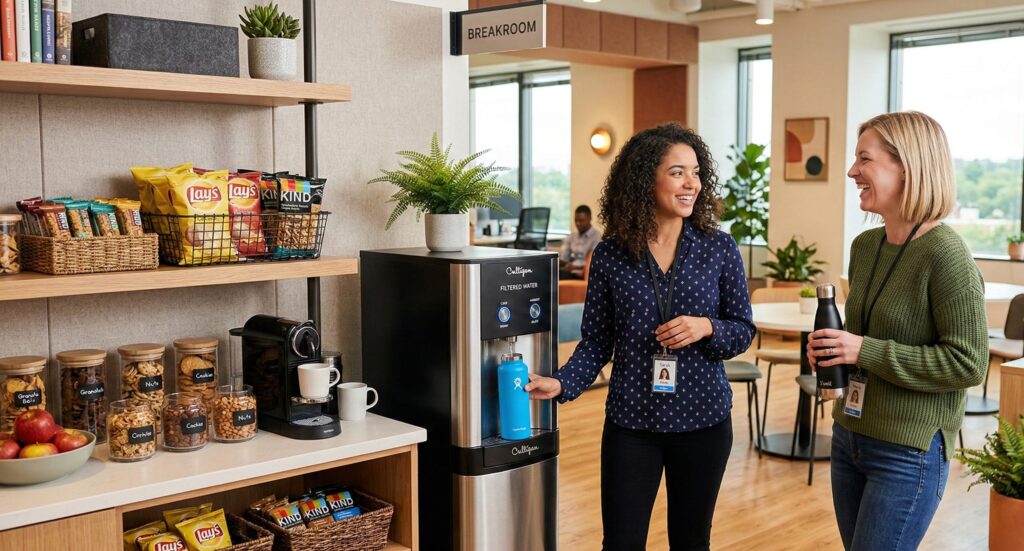

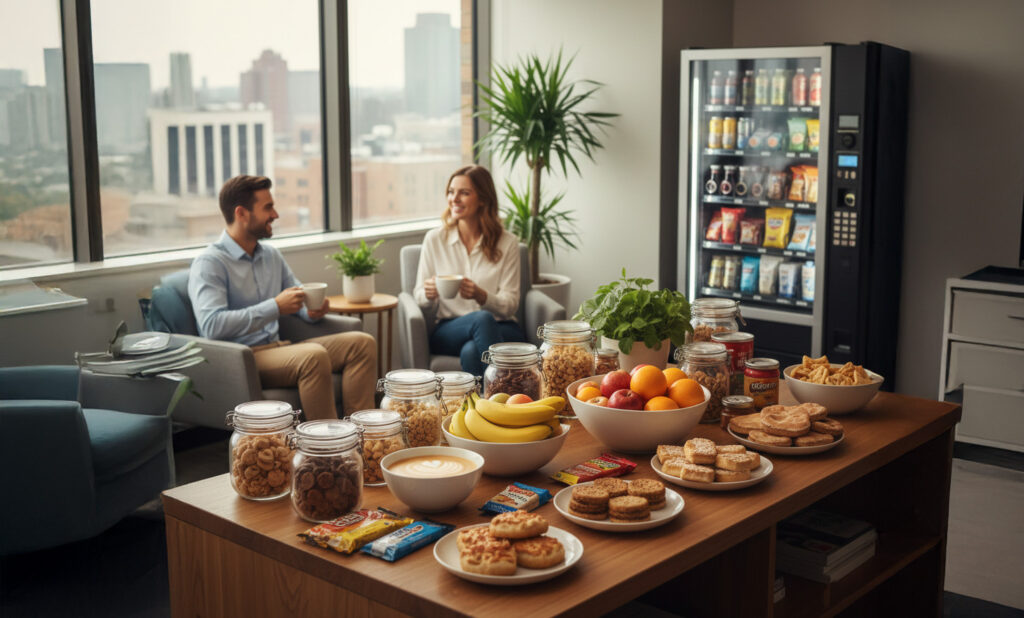
If you’re trying to strengthen culture in 2026, start where people actually connect: the breakroom. Thoughtful snack programs—whether via micro markets, modern vending, or a free, stocked pantry—do more than curb cravings. They create daily touchpoints that reinforce wellness, spark conversation, and keep teams energized to do their best work.
Below is a research-backed guide you can share with HR, Facilities, and Finance to align around the ROI.
Why food in the workplace matters (more than you think)
-
Healthy access changes behavior. The CDC finds that applying food and nutrition guidelines at worksites improves the likelihood that people choose healthier options where food is sold or served—exactly what a curated breakroom does.
-
Engagement is a business outcome. Gallup reports U.S. engagement fell to a 10-year low in 2024 (31%), and low engagement costs the global economy trillions—meaning small, daily culture levers (like shared food moments) matter.
-
Wellness links to performance. Harvard sources summarize that employees in better health are more engaged and productive; comprehensive wellness programs have shown positive ROI (J&J example). Snacks aren’t a full wellness program, but they’re a high-frequency nudge that supports it.
Culture effects you can feel (and measure)
1) Belonging & team connection
Eating together fosters informal conversation, which strengthens trust and cross-team ties. Even simple communal food rituals (monthly tasting, “snack of the week”) can lift cohesion; research on shared meals links them to productivity and stronger relationships.
2) Morale & employer brand
SHRM’s 2025 benefits coverage notes many employers now offer on-site food as part of total rewards—because employees notice and value it. Snack programs are visible proof that leadership invests in daily experience.
3) Focus & fewer afternoon slumps
Swapping high-sugar items for protein, fiber, and low-glycemic options supports steadier energy and attention. CDC’s food-service guidance and behavioral design toolkit show that where and how you place items (eye-level fruit, labeled “smart picks,” hydration front-and-center) nudges better choices throughout the day.
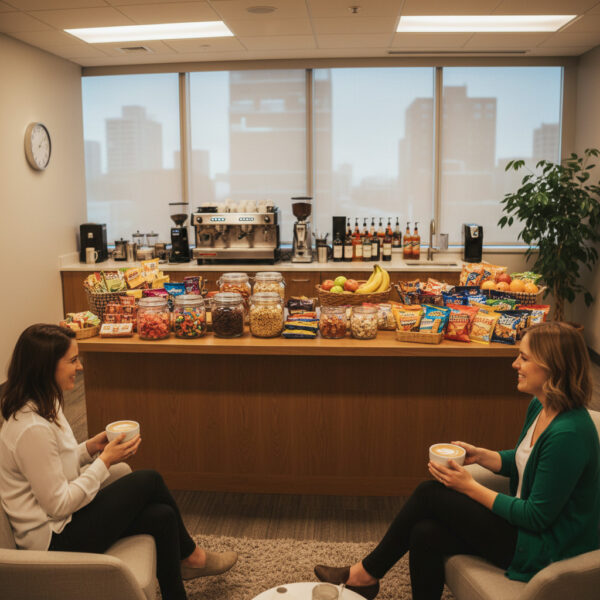
Productivity & ROI: what the numbers suggest
-
Nutrition and output. The International Labour Organization has long documented that poor workplace nutrition can reduce productivity—estimates up to 20% in some settings. Providing decent food at work improves morale and performance.
-
Time saved onsite. When snacks and beverages are accessible, fewer mid-day coffee/snack trips pull people offsite; industry surveys have highlighted the cumulative time loss from offsite runs, a pain point breakrooms directly address.
-
Amenities matter to occupancy decisions. Corporate real estate surveys consistently rank food & beverage among the most valued amenities—affecting where companies lease and how often people come in. That reinforces your case to invest in the breakroom experience.
Bottom line: High-frequency, healthy amenities reinforce engagement and wellness habits—two of the strongest predictors of sustained performance.
What to stock: a simple, research-informed framework
Offer three lanes every day:
-
Indulgent (small portion): morale treats (e.g., mini cookies, dark-chocolate bites).
-
Balanced: popcorn, trail mix with nuts & fruit, hummus + whole-grain crackers.
-
Performance: Greek yogurt, jerky, protein bars <10g sugar, fresh fruit, nuts, refrigerated salads.
Don’t forget beverages: filtered still/sparkling water, unsweetened tea, cold brew, and a few functional options (electrolytes or kombucha). Hydration access is a staple in CDC worksite guidance and boosts overall energy.
Design the environment: eye-level placement for healthy items, clear labels (“Energy Boost,” “Protein-Packed”), and prominent water access—these behavioral nudges measurably improve choices.
Quick FAQ for stakeholders
“Isn’t this just a perk?”
It’s a daily culture system that reinforces wellness and connection. Engagement and well-being correlate strongly with productivity and retention.
“Will people actually choose healthy options?”
Yes—when you make the healthy choice the easy choice via placement, pricing, and visibility. CDC’s toolkit documents the effect of behavioral design in food environments.
“How do we justify the cost?”
Track time saved from fewer offsite runs, utilization of the breakroom, engagement survey comments, and sell-through of healthier SKUs. Pair that with external benchmarks on engagement costs and wellness ROI to build a compelling business case.
Wrap-up: Small snacks, big signals
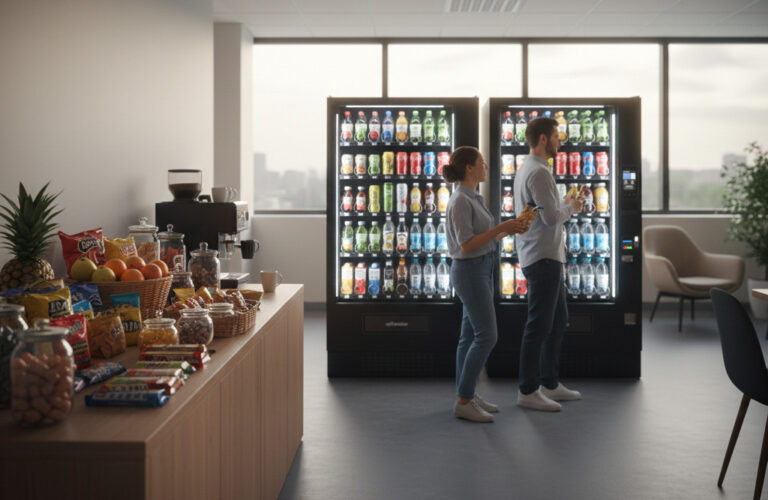
Snacks aren’t just calories; they’re cultural signals. A modern breakroom—whether micro market, vending, or free pantry—tells people: we see you, we support your well-being, and we want you here together. That message fuels morale, focus, and the everyday interactions that make teams great.
Sources
-
Gallup — State of the Global Workplace (2024/2025); U.S. Engagement at 10-Year Low
-
SHRM — 2025 Employee Benefits coverage (on on-site food and evolving perks).
-
ILO — Food at Work; releases on productivity impacts of poor workplace nutrition
-
CBRE — Americas Office Occupier Sentiment (amenities such as food & beverage among top priorities).
-
BusinessNewsDaily — Shared meals & productivity (summary of Cornell research).