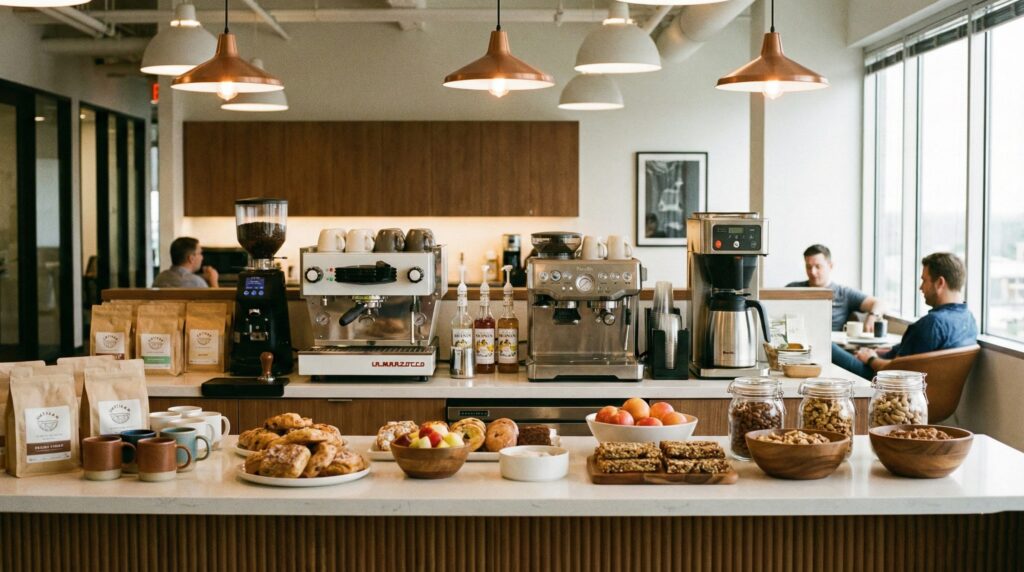

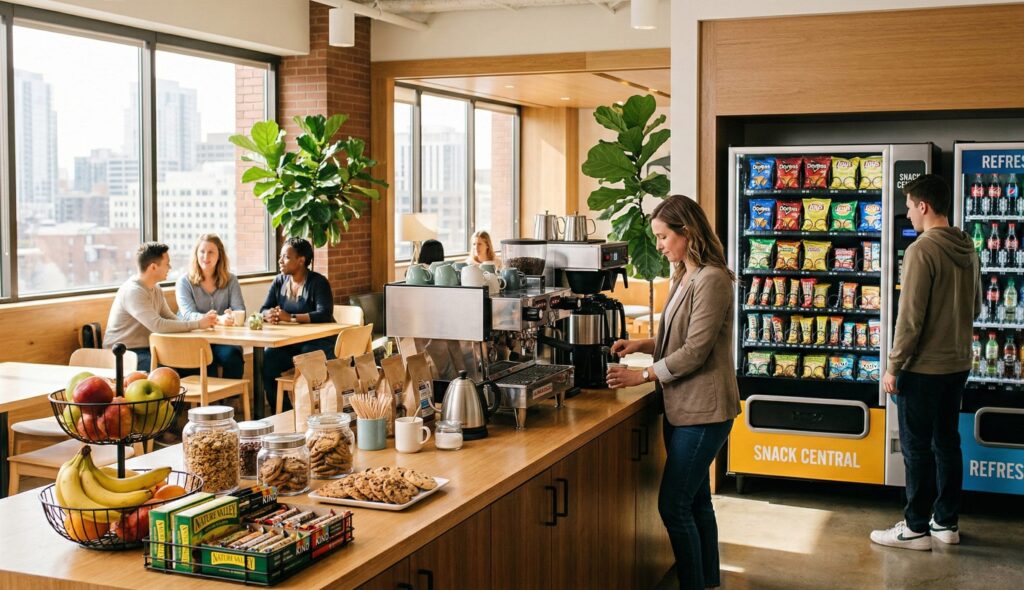
If your business runs around the clock, your breakroom should too.
For warehouses, manufacturing plants, healthcare facilities, and any operation with multiple shifts, the breakroom isn’t just a nice-to-have. It’s where employees refuel, decompress, and get through long hours. But too often, the third shift walks into picked-over vending machines and an empty coffee pot while the day crew gets the good stuff.
That’s a problem. And it’s fixable.
Availability Matters More Than Aesthetics
A breakroom that only works for 9-to-5 employees isn’t really working. If someone clocks in at 10pm, they deserve the same access to snacks, drinks, and coffee as someone who arrives at 8am.
This starts with the basics: self-service options that don’t depend on someone being there to restock or brew a fresh pot. Vending machines, micro markets, and single-serve coffee systems all solve this problem in different ways, but the goal is the same. Employees on any shift should be able to walk in and find what they need without hoping someone remembered to refill the fridge.
Stock for Different Needs at Different Hours
What people want at 7am isn’t necessarily what they want at 2am.
Morning shifts tend to lean toward coffee, breakfast items, and lighter snacks. Overnight crews often need something more substantial to get through the back half of a shift, think protein-heavy options, quick meals, and cold caffeine. And everyone, regardless of shift, benefits from easy access to water and hydration options.
A good breakroom accounts for this. That might mean stocking a mix of grab-and-go meals alongside traditional snacks, or making sure the beverage selection includes both hot coffee and cold energy drinks. The more variety you offer, the more likely every employee finds something that works for them.
Keep It Stocked, Keep It Clean
Nothing says “we forgot about you” like a breakroom that’s clearly been neglected since the day shift left. Empty shelves, overflowing trash, and a microwave that hasn’t been wiped down in a week all send a message, whether you intend it or not.
Restocking and maintenance schedules should account for all shifts, not just the busiest ones. If your vending or micro market partner handles restocking, make sure the timing works for your operation. And if cleanliness is managed internally, build overnight and weekend checks into the routine.
Consider the Environment
Employees on overnight or early morning shifts are often working when the rest of the building is dark and quiet. The breakroom becomes one of the few places to interact with coworkers, take a mental break, or just sit somewhere that isn’t a workstation.
Small details matter here: decent lighting, comfortable seating, maybe a phone charging station. It doesn’t need to be fancy, but it should feel like a space worth spending ten minutes in.
It’s a Retention Play
For businesses competing for shift workers, the breakroom can be a differentiator. It signals how much you’re willing to invest in employee comfort, even when no one’s watching.
A well-run breakroom tells second and third shift employees that they matter just as much as the day crew. That might not show up on a recruiting flyer, but it shows up in how people feel about coming to work, and whether they stick around.
The goal is simple: no matter when someone clocks in, the breakroom should be ready for them.